Vallenato 101: Four Rhythms, One Accordion, Infinite Heartbreak
Vallenato is the sound of Colombia's Caribbean valleys: an accordion, a caja drum, a guacharaca scraper, and somebody's heart breaking in real time. It was farm-worker news delivery before it was music. Singers carried stories from town to town, and the stories happened to rhyme.
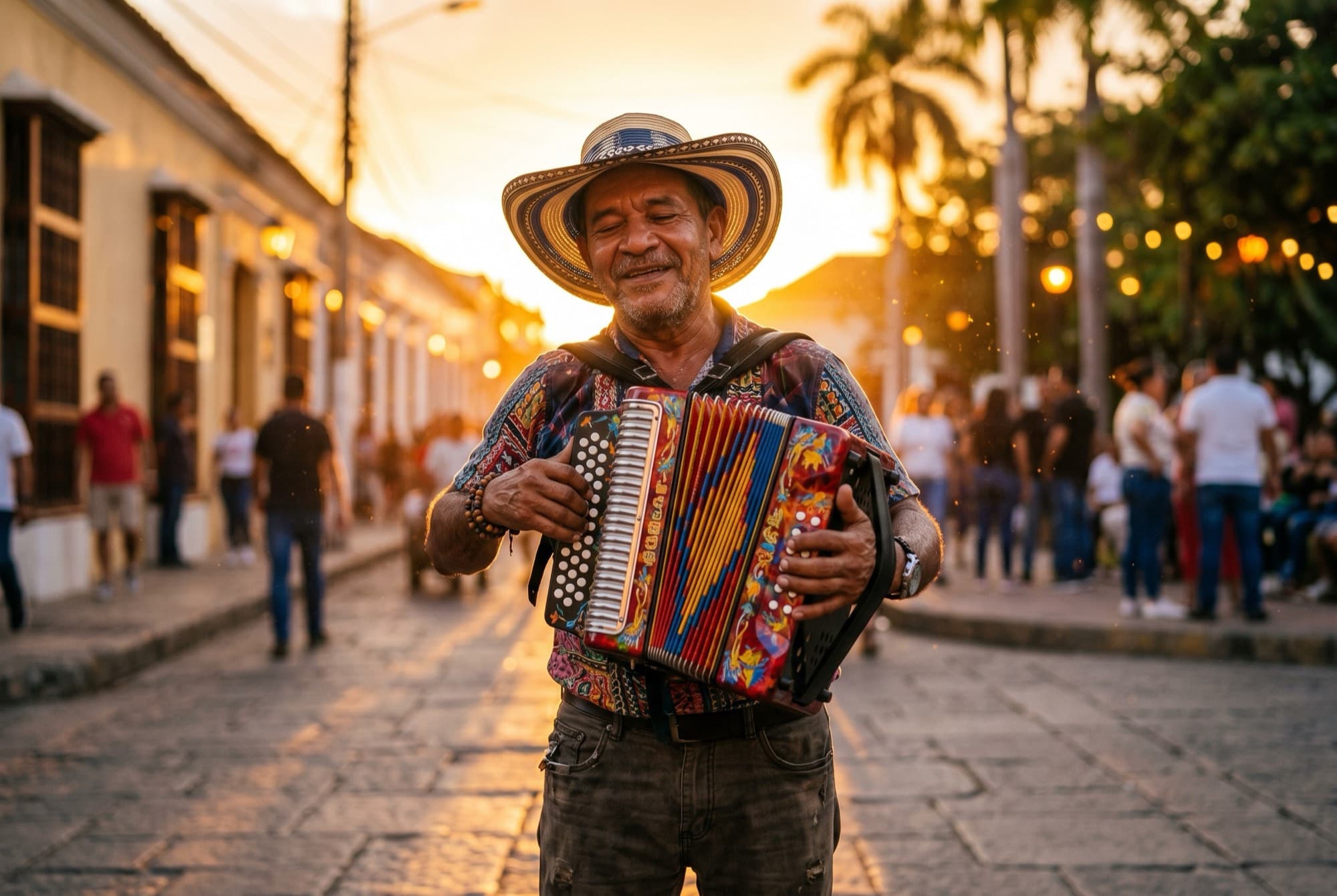
There are four traditional airs, and once you can tell them apart you will never hear the genre the same way. Paseo is the storyteller, mid-tempo and melodic, the one you already know from a thousand family parties. Merengue vallenato runs faster and brighter. Puya is the showoff: blistering tempo, accordion players proving a point. Son is the slow burn, melancholy in 2/4, the one that comes out when the bottle is half empty.
Every April, Valledupar hosts the Festival de la Leyenda Vallenata, where accordionists compete for the title of Rey Vallenato in front of crowds that treat a paseo the way Wembley treats a free kick. In 2015 UNESCO added vallenato to its list of Intangible Cultural Heritage in need of safeguarding, which is the formal way of saying: this matters, protect it.
Start your education with the classics: Alejo Durán, the first Rey Vallenato. Diomedes Díaz, the most beloved and most complicated voice in the genre. Jorge Oñate, Los Hermanos Zuleta, Binomio de Oro for the romantic era. Then notice how much vallenato DNA lives inside modern Colombian pop. Carlos Vives built a career electrifying it, and half of Shakira's early catalog winks at it.
Heard at the right hour, in the right company, with the accordion close enough to feel, vallenato stops being a genre and becomes a place. We will keep writing about the artists keeping it alive, from Valledupar to the Queens basement parties.