The Coffee Axis, Explained: Why Region Changes Everything in Your Cup
Colombia is the only major coffee origin where essentially all production is arabica, grown on smallholder farms, and picked by hand. That part you may know. What surprises people is how different the regions taste from each other. Colombian coffee is not one flavor. It is a country of microclimates arguing with each other, deliciously.
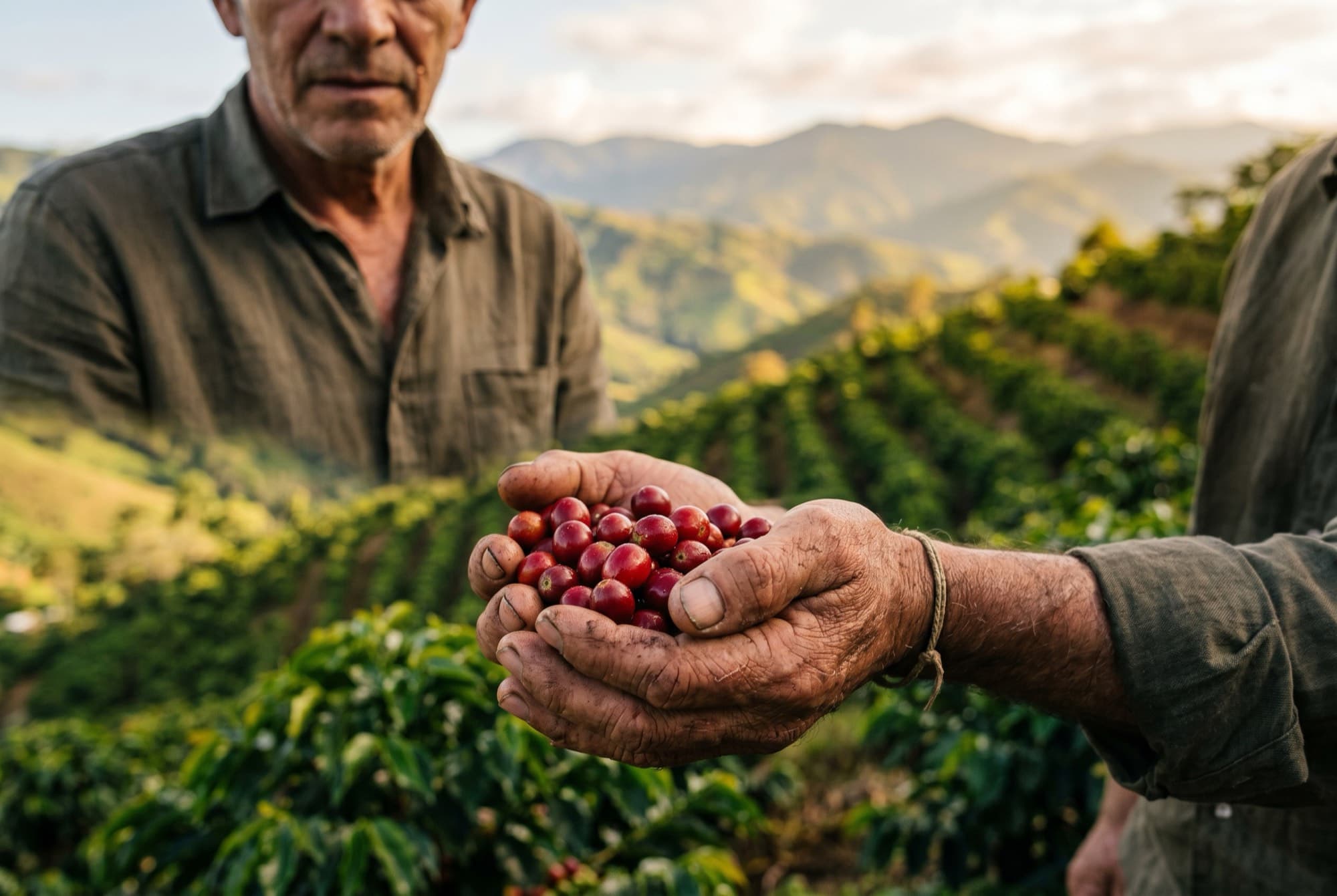
The classic Eje Cafetero, the axis of Caldas, Quindío, and Risaralda, is where the postcard image comes from: Willys jeeps, bahareque farmhouses, valleys quilted with coffee rows. Cup profile: balanced, sweet, caramel and chocolate, medium body. This is the coffee that built Colombia's reputation, and pueblos like Salento and Filandia are the easiest places on earth to fall in love with the harvest.
Huila, in the south, is the quality engine of modern Colombian specialty coffee. More awarded lots come out of Huila than anywhere else. Altitude runs high, the soil is volcanic, and the cup gets brighter: red fruit, panela sweetness, a juicy acidity that wakes up the back of your tongue. If a roaster lists a finca in Pitalito or Garzón, buy it.
Nariño, pressed against the Ecuadorian border, grows coffee at altitudes that should not work, some lots above 2,200 meters. The cherries mature slowly in the thin air and the result is intensity: floral aromatics, citrus, a sparkling cup that tastes more like a fancy tea than a diner coffee. Sierra Nevada coffee from the north, much of it grown by Arhuaco and Kogui families, rounds out the map with earthy, cacao-heavy profiles.
Once you taste the regions side by side, you stop drinking coffee on autopilot. Pick a bag that names where it is from, brew it black at least once, and pay attention. The finca worked hard for that cup, and the geography is right there in the flavor.